
Table of Contents
When travelers experience brittany react for the first time, they’re often struck by the region’s dramatic contrast to the rest of France. This Celtic corner of northwestern France delivers a unique blend of rugged coastlines, medieval towns, and a fiercely independent cultural identity that sets it apart from the wine-and-cheese stereotypes many Americans hold about French travel.
Understanding how visitors brittany react helps you prepare for what makes this region exceptional. The initial response typically involves surprise at the weather patterns, delight at the seafood quality, and fascination with the distinct Breton language still spoken in rural areas.
How Most Americans Brittany React Upon Arrival
The Atlantic climate hits differently. Unlike the Mediterranean warmth of southern France, Brittany’s weather shifts rapidly between sun and rain, often within the same afternoon. Pack layers and waterproof gear regardless of season.
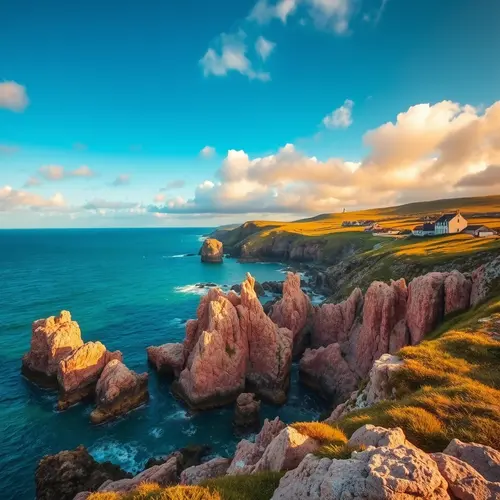
The coastline defines the experience here. With over 1,700 miles of shoreline, Brittany offers everything from pink granite formations at Ploumanac’h to the dramatic cliffs of Cap Fréhel. According to the official French Tourism Development Agency, Brittany ranks as one of France’s top three coastal destinations for authenticity-seeking travelers.
Language barriers emerge differently here. While French remains the official language, you’ll encounter Breton (Brezhoneg) on road signs and hear it in local markets. This Celtic language, related to Welsh and Cornish, reinforces the region’s distinct identity from mainland France.
The Brittany React to Culinary Traditions
Galettes and crêpes dominate the food scene, but there’s technical precision behind these buckwheat pancakes. Traditional galettes use only three ingredients: buckwheat flour, water, and salt. The batter requires a 24-hour rest period for optimal texture.
Seafood quality exceeds expectations. Cancale oysters, cultivated in the bay of Mont-Saint-Michel, represent some of Europe’s finest shellfish. Local fishermen harvest them using techniques that stretch back centuries, maintaining sustainable practices that protect the marine ecosystem.
Cider, not wine, pairs with meals. Brittany produces over 60% of France’s cider, and understanding the classification system enhances your dining experience. Doux (sweet) contains 2-3% alcohol, demi-sec (semi-dry) reaches 3-4%, and brut (dry) tops out at 4-5%.
Common Brittany React Patterns Among First-Time Visitors
| Aspect | Initial Expectation | Actual Reality |
|---|---|---|
| Weather | Mediterranean sunshine | Variable Atlantic climate with frequent drizzle |
| Crowds | Heavy tourist saturation | Significantly fewer tourists than Paris or Provence |
| Transportation | Easy train access | Car rental essential for coastal exploration |
| Cuisine | Classic French fare | Celtic-influenced seafood and buckwheat specialties |
| Architecture | Parisian elegance | Medieval half-timbered houses and granite churches |
Understanding the Cultural Brittany React Factor
Bretons maintain fierce pride in their heritage. This isn’t casual regional loyalty—it’s a deeply rooted cultural identity that predates French annexation. The region was an independent duchy until 1532, and that history still shapes local attitudes.
Festival participation offers authentic immersion. The Festival Interceltique de Lorient draws over 700,000 visitors who experience traditional Breton music, dance, and customs. Unlike tourist-focused events, this represents genuine cultural preservation.
English proficiency varies significantly by location. Coastal resort towns like Dinard cater to international visitors with solid English communication. Rural inland villages require basic French phrases or translation tools for meaningful interaction.
Strategic Planning for Your Brittany React Journey
Transportation infrastructure requires specific consideration. While the TGV connects Paris to Rennes in under two hours, exploring the coastline demands vehicle access. Public transit serves major towns but leaves coastal gems like Pointe du Raz largely inaccessible without personal transportation.
Accommodation styles differ from other French regions. Stone farmhouses (gîtes) converted into vacation rentals provide authentic experiences at competitive rates. Many retain original architectural elements like exposed beams and granite fireplaces while offering modern amenities.
Expert Opinion: The Brittany React Myth Worth Debunking
Many guidebooks perpetuate the myth that Brittany’s weather makes it unsuitable for beach vacations. This overlooks a crucial factor: water temperature remains moderate year-round due to Atlantic currents, and the coastal microclimate produces surprisingly pleasant conditions from June through September.
The real challenge isn’t weather—it’s timing your visit around tidal patterns. Brittany experiences some of Europe’s most dramatic tidal ranges, with differences exceeding 40 feet in locations like Mont-Saint-Michel. This affects beach access, coastal hiking routes, and even restaurant operating hours in tidal-dependent areas.
Essential Brittany React Preparation Checklist
- Book accommodations near Dinan, Saint-Malo, or Quimper as strategic bases for coastal exploration
- Reserve car rental in advance during peak months (July-August) when availability tightens
- Download offline maps for rural areas where cellular coverage becomes spotty
- Pack waterproof hiking boots rated for wet granite surfaces common on coastal trails
- Research tide schedules if planning activities at specific beaches or coastal sites
- Learn five essential French phrases beyond basic greetings to navigate rural interactions
- Secure oyster farm tour reservations at least two weeks ahead in Cancale
The reality of how travelers brittany react ultimately depends on preparation and mindset. Those who arrive expecting a different slice of France—one shaped by Celtic roots, maritime traditions, and independent spirit—find themselves rewarded with an experience that feels authentically distinct from the country’s more celebrated regions. The region demands engagement rather than passive observation, offering depth to visitors willing to venture beyond surface-level tourism.

Driven by my passion as a Muslim who loves religious destinations, I document personal spiritual journeys to learn what travelers truly seek: devotion, comfort, and lasting memories. This vision shapes end-to-end pilgrim support. I have documented 2,312 travel guides here since 2022.


More Stories
What Is Umroh? A Complete Guide for First Pilgrims
5 Reasons Why muslim a religion Matters for Travelers
Muslim and Islamic Travel: 7 Essential Insights