
Table of Contents
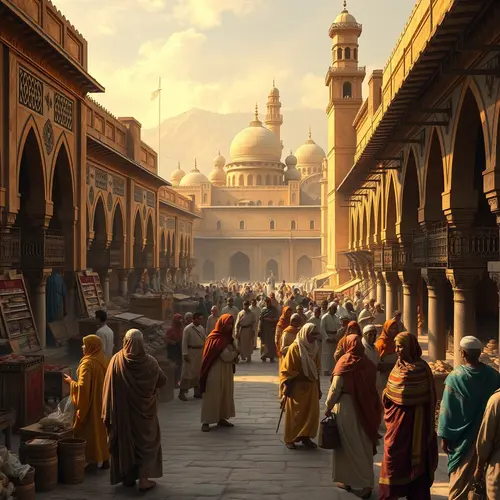
Islamic cultural diffusion represents the historical process through which Islamic civilization’s ideas, practices, architecture, scientific knowledge, and artistic traditions spread across vast geographical regions. This phenomenon shaped societies from Spain to Indonesia, fundamentally transforming trade networks, intellectual traditions, and urban development patterns across three continents.
Understanding this diffusion process reveals how interconnected medieval societies operated and how cultural exchange functioned long before modern globalization.
Understanding Islamic Cultural Diffusion Mechanisms
The spread of Islamic cultural elements occurred through multiple channels, each contributing unique aspects to receiving societies. Unlike simple conquest narratives, the reality involved complex exchanges where local traditions merged with Islamic practices to create distinctive regional expressions.
Trade networks served as primary vessels for cultural transmission. Muslim merchants established communities along commercial routes stretching from West Africa to Southeast Asia. These trading diasporas introduced Islamic practices, architectural styles, and legal frameworks to non-Muslim societies.
The Indian Ocean trade network exemplifies this pattern. Arab and Persian traders brought Islamic commercial law, navigational techniques, and urban planning concepts to coastal East Africa and the Malay Archipelago.
The Five Core Pathways of Islamic Cultural Diffusion
1. Commercial Networks and Islamic Cultural Diffusion
Trade routes functioned as arteries for cultural exchange. The Silk Road, Trans-Saharan trade routes, and Indian Ocean maritime networks facilitated more than commodity exchange. Muslim merchants carried manuscripts, architectural blueprints, and technological innovations alongside their goods.
The introduction of paper-making technology from China to the Islamic world, then westward to Europe, demonstrates how Muslim intermediaries bridged civilizations. Baghdad’s paper mills supplied manuscript production that accelerated knowledge preservation and distribution across Islamic lands.
2. Scholarly Migration and Knowledge Transfer
Islamic civilization’s emphasis on learning created a powerful mechanism for islamic cultural diffusion. Scholars traveled extensively between major intellectual centers like Baghdad, Cordoba, Cairo, and Samarkand. This mobility distributed scientific knowledge, philosophical texts, and mathematical innovations.
The House of Wisdom in Baghdad attracted scholars from diverse backgrounds. Their translations of Greek, Persian, and Indian texts into Arabic preserved knowledge that later influenced European Renaissance thinking. Universities and madrasas established standardized curricula that spread consistent educational frameworks across distant regions.
3. Political Expansion and Administrative Systems
Military conquests initially spread Islamic political authority, but lasting cultural impact came through administrative frameworks. Islamic legal systems, urban planning principles, and bureaucratic structures provided governance models that persisted long after political control shifted.
The Umayyad and Abbasid caliphates developed sophisticated administrative machinery. Their taxation systems, postal networks, and judicial institutions influenced successor states across North Africa, the Middle East, and Central Asia.
4. Architectural and Artistic Expression
Islamic architectural principles spread through commissioned projects and traveling craftsmen. The distinctive features—geometric patterns, calligraphic decoration, courtyard designs, and dome construction techniques—appeared in diverse regional contexts.
Moorish architecture in Spain influenced European Gothic design. The Taj Mahal represents Persian-Mughal synthesis. Southeast Asian mosques blend local timber construction with Islamic spatial concepts. Each example shows how islamic cultural diffusion adapted to local materials and aesthetic preferences.
5. Sufi Networks and Spiritual Practice
Sufi orders created decentralized networks that spread Islamic mystical practices and social institutions. Unlike formal religious structures, Sufi brotherhoods adapted readily to local spiritual traditions, facilitating Islamic cultural integration.
These orders established lodges, shrines, and educational institutions throughout Central Asia, Sub-Saharan Africa, and South Asia. Their inclusive approach and emphasis on personal devotion made Islamic practices accessible to diverse populations.
Comparative Analysis of Islamic Cultural Diffusion Mechanisms
| Mechanism | Primary Regions | Cultural Elements Transmitted | Duration of Impact |
|---|---|---|---|
| Trade Networks | East Africa, Southeast Asia, West Africa | Commercial law, urban design, dietary practices | Sustained over centuries |
| Scholarly Exchange | Mediterranean, Central Asia, Persia | Scientific methods, mathematics, philosophy | Peak 8th-13th centuries |
| Political Administration | Middle East, North Africa, Iberia | Legal systems, bureaucracy, taxation | Institutionally embedded |
| Architectural Practice | Global reach | Building techniques, decorative arts, urban planning | Permanent physical legacy |
| Sufi Networks | South Asia, Central Asia, Sub-Saharan Africa | Spiritual practices, social services, music traditions | Continues to present |
Regional Variations in Islamic Cultural Diffusion Adoption
Islamic cultural diffusion produced remarkably diverse outcomes depending on receiving societies’ characteristics. In Persia, pre-existing Zoroastrian and administrative traditions merged with Islamic practices, creating a distinctive Persianate culture that influenced Central Asian and Indian Islamic societies.
West African societies integrated Islamic scholarship and commercial practices while maintaining traditional governance structures. The Mali and Songhai empires demonstrated how Islamic learning centers like Timbuktu coexisted with indigenous political systems.
Southeast Asian Islamic societies developed unique architectural styles using local materials. Indonesian and Malaysian mosques feature timber construction and multi-tiered roofs reflecting indigenous building traditions rather than Middle Eastern stone architecture.
Scientific and Technological Transmission
Islamic scholars preserved and advanced knowledge in multiple fields, creating a foundation for later scientific development. Their contributions to algebra, optics, medicine, and astronomy spread through translated texts and personal teaching relationships.
The astrolabe, refined by Muslim astronomers, became essential for navigation and surveying. Medical texts by physicians like Ibn Sina influenced European medical education for centuries. Agricultural techniques and crop species moved along trade routes, transforming farming practices in Mediterranean Europe and East Africa.
Linguistic and Literary Impact
Arabic became a lingua franca across Islamic lands, facilitating communication and knowledge transfer. Persian developed as a major literary language, influencing Turkish and Urdu. These languages carried Islamic concepts and literary forms into diverse linguistic landscapes.
The spread of Arabic script provided writing systems for previously oral languages. Swahili, Malay, and numerous African and Asian languages adopted Arabic script, connecting them to broader Islamic literary traditions.
Expert Perspective: The Diffusion Paradox
A common misconception treats islamic cultural diffusion as unidirectional flow from core to periphery. Historical evidence reveals a more complex pattern of reciprocal exchange. The Islamic world absorbed extensive knowledge from Greek, Persian, Indian, and Chinese sources, synthesized these traditions, and transmitted the enhanced body of knowledge further.
This synthesis model explains Islamic civilization’s role as a knowledge bridge between ancient and modern eras. The preservation of Greek philosophical and scientific texts through Arabic translation enabled their later recovery by European scholars.
Key Factors Enabling Widespread Diffusion
Several structural elements facilitated the extensive reach of Islamic cultural elements:
- Linguistic standardization: Arabic’s role as liturgical and scholarly language created communication continuity across vast distances
- Portable institutions: Mosques, madrasas, and courts could be established wherever Muslim communities formed
- Legal flexibility: Islamic jurisprudence accommodated local customs through various schools of legal interpretation
- Commercial advantages: Islamic commercial law and instruments facilitated long-distance trade
- Intellectual openness: Islamic scholarly tradition valued knowledge regardless of origin
- Urban planning principles: Islamic cities followed recognizable spatial patterns adaptable to different climates and topographies
Lasting Legacy and Contemporary Relevance
The patterns established through historical islamic cultural diffusion continue shaping global cultural geography. UNESCO World Heritage Sites across multiple continents preserve architectural monuments reflecting Islamic influence. Museums worldwide display artifacts demonstrating the artistic and scientific achievements of Islamic civilization.
Academic institutions study this diffusion process to understand pre-modern globalization mechanisms. The methods through which ideas, technologies, and practices spread before modern transportation and communication offer insights into cultural exchange dynamics.
Modern Muslim-majority societies reflect diverse expressions of Islamic culture shaped by centuries of interaction between Islamic principles and local traditions. This diversity challenges monolithic stereotypes and demonstrates how cultural diffusion creates hybrid forms rather than uniform transplantation.
The historical experience of islamic cultural diffusion provides frameworks for understanding contemporary cultural exchange. The balance between maintaining core identity and adapting to local contexts remains relevant for any cultural transmission process. Recognizing this complexity enriches our understanding of how civilizations interact and influence one another across time and space.


More Stories
Americans Are Looking to Saudi Arabia: What to Know Before Seeking a Saudi Visa
10 Influential American Islamic Scholars Shaping Faith
Why You Should Consider a Vacation to Jamaica