
Table of Contents
Understanding the distinction between islamic and muslim is essential for travelers exploring destinations across the Middle East, North Africa, Southeast Asia, and beyond. While these terms are closely related, they serve different grammatical and contextual purposes. “Islamic” functions as an adjective describing things related to the religion of Islam—such as Islamic architecture, Islamic art, or Islamic law. “Muslim” refers to a person who practices Islam or serves as an adjective describing people.
This distinction matters significantly when communicating respectfully in Muslim-majority countries. Misusing these terms can lead to awkward conversations or unintended offense during your travels.
The Fundamental Difference Between Islamic and Muslim
The core distinction is grammatical. “Islamic” modifies objects, concepts, institutions, and abstract ideas. You visit an Islamic museum, admire Islamic calligraphy, or study Islamic finance. The term connects directly to the faith system itself.
“Muslim” identifies individuals or communities. You meet Muslim travelers, stay with Muslim hosts, or attend a Muslim wedding. When describing people or groups of people, “Muslim” is always the correct choice.
According to the Oxford Islamic Studies Online, this differentiation has been standardized in academic and journalistic writing for decades. Major news organizations like BBC and Reuters maintain strict style guides on this usage.
Practical Applications for Travelers
When planning your itinerary, you’ll encounter “Islamic” in cultural contexts. The Islamic Museum of Australia, Islamic Heritage sites in Andalusia, or Islamic Studies centers at universities all use this adjective correctly. These institutions focus on the religion’s artistic, historical, and intellectual contributions.
Meanwhile, demographic and social contexts use “Muslim.” Travel forums discuss Muslim-friendly hotels (properties catering to Muslim guests’ needs), Muslim communities in various cities, or Muslim travelers’ experiences. Tour operators might offer “Muslim heritage tours” focusing on the people and communities rather than religious doctrine.
Common Mistakes That Islamic and Muslim Clarity Prevents
Many travelers incorrectly say “Muslim art” when they mean Islamic art. Art doesn’t practice religion—people do. The geometric patterns in the Alhambra represent Islamic artistic traditions, not “Muslim” patterns.
Conversely, describing a person as “an Islamic” is grammatically incorrect. You wouldn’t call someone “a Christian-ic person.” The proper term is “a Muslim” or “Muslim people.”
Food labeling creates another area of confusion. “Halal” describes food permissible under Islamic dietary laws. While Muslim individuals follow these guidelines, the food itself is halal, the restaurant might be Muslim-owned, and the dietary laws are Islamic.
Cultural Sensitivity in Muslim-Majority Destinations
Demonstrating awareness of islamic and muslim terminology shows respect for local cultures. When visiting Morocco, Indonesia, Turkey, or the United Arab Emirates, using these terms correctly signals cultural competence.
During Ramadan, for instance, you’re observing an Islamic holy month. The Muslims around you are fasting. The mosques you visit are Islamic houses of worship. The call to prayer follows Islamic tradition. This precision in language reflects genuine cultural understanding.
How Islamic and Muslim Terms Apply to Architecture and Landmarks
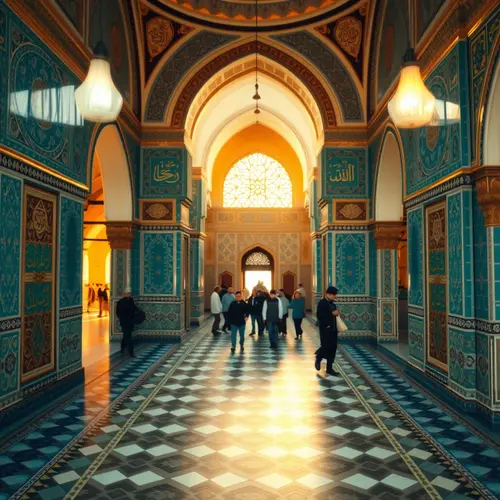
Architectural tourism provides clear examples. The Blue Mosque in Istanbul showcases Islamic architecture—its design principles, decorative elements, and spatial concepts derive from Islamic artistic traditions. The Muslims who worship there practice their faith within this Islamic space.
When describing the Taj Mahal, you’re looking at Mughal architecture with Islamic influences. The emperor who commissioned it was Muslim. The decorative calligraphy represents Islamic art. Each term serves its specific function.
| Use “Islamic” For | Use “Muslim” For |
|---|---|
| Art, architecture, calligraphy | People, individuals, communities |
| Laws, principles, teachings | Demographics, populations |
| Historical periods, golden ages | Personal identity, nationality |
| Banking systems, finance | Travelers, hosts, guides |
| Holidays, observances, rituals | Family structures, social groups |
| Texts, scholarship, studies | Business owners, professionals |
Expert Perspective: Why This Distinction Evolved
The English language borrowed these terms at different historical moments, which explains their distinct uses. “Muslim” entered English through direct contact with Arabic-speaking peoples during the medieval period. “Islamic” emerged later as European scholars needed an adjective form to describe the civilization’s cultural output.
This mirrors similar patterns in other religious terminology. We say “Jewish people” but “Judaic studies.” We refer to “Christian communities” but “Christian theology.” The pattern holds across religious descriptors in English.
Regional Variations and Islamic and Muslim Usage
Different English-speaking regions show minor variations. British English strongly maintains the distinction, influenced by academic standards from Oxford and Cambridge. American English generally follows the same pattern, though informal speech sometimes blurs the lines.
In countries where English serves as a second language, you might encounter mixed usage. Don’t correct locals—understand that language evolves differently in multilingual contexts. However, in your own communication, maintaining the standard distinction demonstrates respect and clarity.
Practical Scenarios for Travelers
Booking accommodations? Look for “Muslim-friendly hotels” that cater to Muslim guests’ needs—prayer spaces, halal food, gender-segregated facilities. These properties understand Islamic requirements for modesty and worship.
Shopping for souvenirs? You’re buying Islamic art—miniature paintings, geometric textiles, carved wooden boxes. The artisan who made them might be Muslim, but the art form itself follows Islamic aesthetic principles.
Hiring a guide? Your Muslim guide can explain Islamic history, show you Islamic monuments, and help you understand Islamic customs. Each term serves its purpose in that single sentence.
Beyond Terminology: Building Cultural Intelligence
Understanding islamic and muslim terminology represents just one facet of cultural competence. Travelers who grasp this distinction tend to ask better questions, engage more meaningfully with local communities, and avoid common faux pas.
This knowledge compounds. Once you understand the adjective-noun relationship, you’ll naturally apply it to other contexts. Islamic philosophy, Muslim philosophers. Islamic finance, Muslim investors. Islamic values, Muslim families. The pattern becomes intuitive.
Resources for Deeper Understanding
Before traveling to Muslim-majority countries, consult cultural guides from reputable sources. The U.S. State Department’s country-specific information pages provide cultural notes. Academic institutions like Harvard’s Center for Middle Eastern Studies publish accessible primers.
Travel guidebooks from Lonely Planet and Rough Guides include cultural sections explaining religious terminology. These resources help you navigate not just islamic and muslim distinctions but broader cultural contexts.
- Use “Islamic” when describing objects, concepts, or abstract ideas related to the faith
- Use “Muslim” when referring to people who practice Islam
- Apply this same logic to compound terms: Islamic art, Muslim artists
- Remember that food and objects are halal (permissible), not “Muslim food”
- Architectural styles and historical periods use “Islamic”
- Contemporary demographics and communities use “Muslim”
Final Thoughts on Islamic and Muslim Terminology
Mastering this distinction elevates your travel experience from superficial tourism to meaningful cultural engagement. You’ll communicate more effectively with locals, understand signage and literature more accurately, and demonstrate respect through precise language.
This linguistic precision costs nothing but delivers significant returns in how locals perceive and interact with you. Whether you’re exploring Istanbul’s bazaars, trekking through Morocco’s Atlas Mountains, or island-hopping in Indonesia, proper use of islamic and muslim terminology marks you as a thoughtful, educated traveler rather than a casual tourist.
Driven by my passion as a Muslim who loves religious destinations, I document personal spiritual journeys to learn what travelers truly seek: devotion, comfort, and lasting memories. This vision shapes end-to-end pilgrim support. I have documented 784 travel guides here since 2022.

More Stories
What is Umroh?
The Essential Guide to islam major figures: Lives & Legacy