
Table of Contents
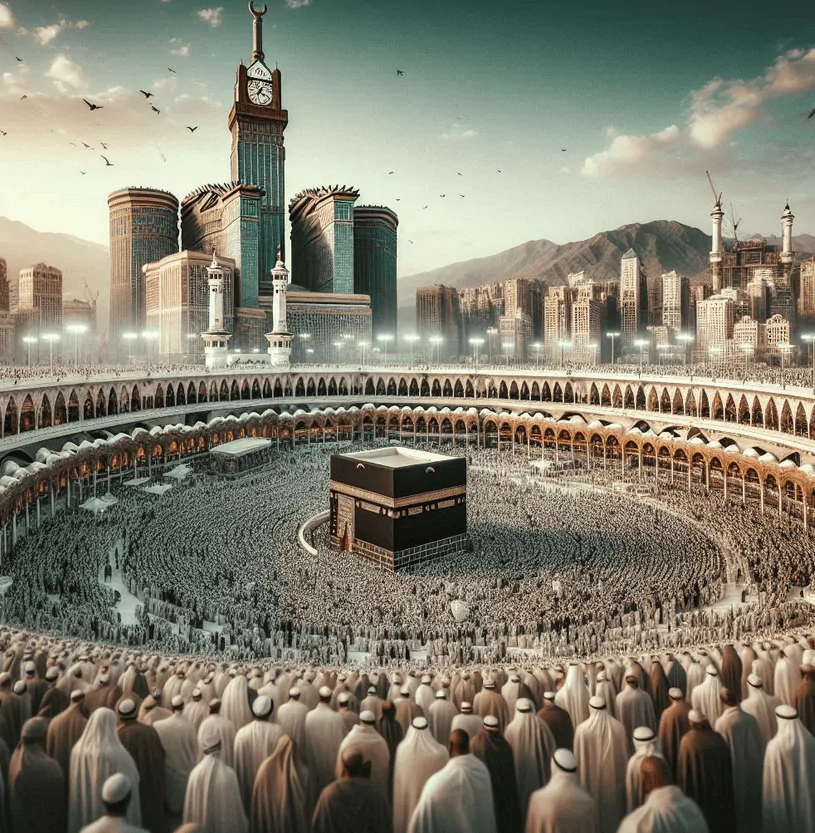
Hajj is a rejuvenating journey, a ritual which cleanses the heart of a believer from all sins. Its blessings and rewards are endless. When a Pilgrim goes to Makkah to perform this beautiful act of worship, he/she is a guest at the house of Allah SWT, Subhan’Allah!
Abu Hurayrah (may Allah be pleased with him) narrated that the Prophet (SAW) said:
“Those who perform the Hajj and those who perform the Umrah are people who have come to visit Allah. If they supplicate Him He will respond to them, and if they ask Him for forgiveness He will forgive them.” (Tirmidhi 2536 and Ibn Majah)
There are a prescribed set of compulsory rituals that have to be performed in order to accomplish Hajj. However while the basic Manasiks (rituals) of Hajj remain the same, there are a few variations on how to perform these rites, which categorizes Hajj into three types:
· Hajj al-Ifrad
· Hajj al-Qiran
· Hajj al-Tamattu’
Hajj al-Ifrad:
Ifrad means “Isolation”. The pilgrim performing Hajj al-Ifrad is called Mufrid. In this type of Hajj, the Mufrid enters into the state of Ihram at Meeqat with the intention of performing only Hajj. In other words, he/she does not perform Umrah. Mufrid should say:
“Labbayk Allahumma labbayka bi Hajj” or “Labbayka Hajjan”
“O Allah! I answer Your call to perform Hajj.”
The pilgrim remains in the state of Ihram till he has carried out all the rituals of Hajj, upto the Farewell Tawaf (Tawaf e Wida). It is not obligatory for Mufrid to slaughter the hadi (sacrificial animal).
Hajj al-Qiran:
Qiran means “conjoining”. In this type of Hajj, the Pilgrim (called Qarin in this case) goes into the state of Ihram, at Meeqat, with the intention of performing both Umrah and Hajj. He/She performs Umrah (Tawaf and Sa’i) and maintains Ihram till all the rituals of Hajj are performed. In other words, a Qarin is not allowed to abandon the state of Ihram after carrying out Umrah. The pilgrim should say:
“Labbayk Allahumma labbayka bi Hajjin wa Umrah”
“O Allah! I answer Your call to perform Hajj and Umrah”
It is obligatory for Qarin to offer the sacrifice of animal in the name of Allah SWT.
Hajj al-Tamattu’:
Tamattu‘ means “to resort to ease and comfort”. It is the easiest and the most abundantly performed type of Hajj. The Pilgrims carry out both Hajj and Umrah but with separate Ihram each, which means that there is a relaxation of Ihram between Hajj and Umrah. The pilgrim performing Hajj al-Tamattu is called Mutamatti’.
In this type of Hajj, the pilgrim or Mutamatti’ first goes into the state of Ihram at Meeqat with the intention of performing only Umrah. He/She should say:
“Labbayk Allahumma labbayka bi Umrah” or “Labbayka ‘Umratan”
“O Allah! I answer Your call to perform Umrah.”
The Mutamatti’ performs the Tawaf, prays two Rak’ahs at Maqaam e Ibrahim, drinks Zamzam, carries out Sa’i and then gets the hair cut or shaved. This ends his/her Umrah and the Mutamatti comes out of the state of Ihram. Now he can continue wearing his normal clothes and the restrictions of Ihram does not apply.
Then on the day of Tarwiyah, that is the 8th of Dhu al-Hijjah, the pilgrim again enters into the state of Ihram, this time with the intention of Hajj, saying:
“Labbayk Allahumma labbayka bi Hajj” or “Labbayka Hajjan”
“O Allah! I answer Your call to perform Hajj.”
The pilgrim then performs all the rituals of Hajj and then comes out of the state of Ihram. Slaughtering of hadi is mandatory in Hajj al-Tamattu‘. Allah SWT says in the Quran:
“If any one wishes to continue the Umrah on to the Hajj, he must make an offering such as he can afford, but if he cannot afford it, he should fast three days during the Hajj and seven days on his return, making ten days in all. This is for those whose household is not in (the precincts of) the Sacred Mosque, and fear Allah, and know that Allah, is strict in punishment.” [2:196]
For those who set out for Hajj way before the Day of Tarwiyah (8 Dhu al-Hijjah), Tamattu’ is the most practical form of Hajj to carry out; while for those who arrive at Makkah close to the Day of Tarwiyah, both Qiran and Ifrad can be easily consummated. It must be clear, however, that all the three above mentioned ways to perform Hajj are perfectly acceptable in Islam; it is merely a matter of preference, convenience and choice.
Which one is the best way to perform Hajj? There is a difference of opinion among scholars on it. According to some, Tamattu’ and Qiran are better and should be preferred since both of these are more demanding and require more effort from the pilgrim. While some scholars are of the view that Ifrad is the best form of Hajj since it allows the pilgrim to carry out Hajj rituals with full involvement, focus and concentration. However it should be remembered that it’s not the type of Hajj which should matter, the reward and acceptance of Hajj lies in the intention, zest and devotion with which Hajj rituals are performed.
As Prophet Muhammad (SAW) said:
“Verily, all actions are but driven by intention and for everyone is what he intended.” [Bukhari and Muslim]
Rest, Allah SWT knows the best!
How to Choose Among the Types of Hajj
The three types of Hajj differ in how the pilgrim combines Umrah and Hajj, and in whether a sacrifice is required. Tamattu is common for travellers who arrive before Hajj, perform Umrah first, then leave ihram until the Hajj days. Qiran keeps the pilgrim in ihram for both and requires a sacrifice. Ifrad performs Hajj alone without Umrah in the same trip. Each of the types of Hajj has conditions, so choose with guidance rather than copying a friend.
For many first-time pilgrims from abroad, Tamattu is the simplest of the types of Hajj because it allows a break between Umrah and Hajj. Pilgrims living in Makkah often choose Ifrad. Qiran suits those who want to stay in ihram continuously. Whichever of the types of Hajj you select, confirm the sacrifice and the rules for changing intention before you begin.
Cost, health and time all influence the choice. The types of Hajj are not ranked by reward; sincerity matters more than which label you use. Ask a trusted scholar about your situation, especially if you are accompanying children or elderly relatives.
Write your plan down and keep it with your documents. A clear understanding of the types of Hajj prevents confusion on the day of Arafah, when everyone is tired and crowds are large.
If you are still unsure, speak to a teacher who knows your arrival date and health. Reading a summary of Hajj alongside our Umrah guide will help you see where the types of Hajj diverge in practice.
Frequently Asked Questions
Which of the types of Hajj is best for first-time pilgrims?
Many scholars recommend Tamattu for travellers, but the best of the types of Hajj depends on your arrival date, health and ability to offer a sacrifice.
Do all types of Hajj require a sacrifice?
Tamattu and Qiran require a hady sacrifice for those who are able, while Ifrad does not require it for the same reason.
Can I change the type of Hajj after starting?
Changing between the types of Hajj is possible in limited cases, but it must follow scholarly rules, so ask before you act.
More detail here: How to Choose the Right hajj package for a Comfortable Journey.
More detail here: Understanding hajj rules Before You Go: What You Really Need to Know.

Driven by my passion as a Muslim who loves religious destinations, I document personal spiritual journeys to learn what travelers truly seek: devotion, comfort, and lasting memories. This vision shapes end-to-end pilgrim support. I have documented 784 travel guides here since 2022.



More Stories
The Meaning Behind the kaaba and Why It Matters for Your Experience
Health and Safety Advice Every hajj women Traveler Should Know
How to Choose the Right hajj package for a Comfortable Journey