
Table of Contents
Islamic Heritage Mystery Exploring the Islamic Heritage Mystery takes us on a journey through centuries of cultural, artistic, and intellectual achievements that continue to intrigue and inspire.

The Enigma of Islamic Heritage Mystery
Architectural Marvels
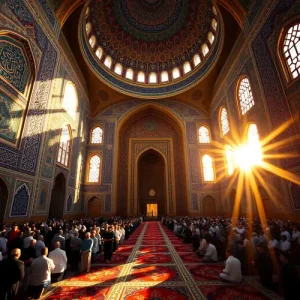
At the heart of the Islamic heritage sites lie magnificent architectural feats like the Sultan Ahmed Mosque in Istanbul, where towering minarets and intricate tile work converge to create a spiritual and aesthetic marvel. These structures reflect the fusion of diverse Islamic artistic traditions.
Cultural Artifacts and Treasures
Delving deeper into the Islamic Heritage Mystery, one encounters cultural artifacts such as the Alhambra’s ornate stucco carvings in Spain or the elegant calligraphy of ancient Qur’ans. Each artifact tells a story of craftsmanship and cultural refinement that characterized Islamic societies.
Scientific and Philosophical Contributions
The Islamic Heritage Mystery extends beyond art and culture to encompass significant scientific and philosophical advancements. Scholars like Ibn Sina and Ibn Rushd pioneered fields such as medicine, astronomy, and philosophy, laying the groundwork for modern scientific inquiry.
Unveiling Historical Significance
Centers of Learning and Innovation
Throughout history, Islamic Heritage Mystery has thrived in centers of learning such as the House of Wisdom in Baghdad, where scholars from diverse backgrounds converged to translate and expand upon ancient texts. These intellectual hubs fostered a golden age of knowledge and innovation.
Trade Routes and Cultural Exchange
The silk roads and maritime trade routes facilitated cultural exchange across continents, enabling the spread of Islamic ideas, technologies, and artistic styles. Cities like Timbuktu in Mali flourished as centers of commerce and scholarship, embodying the cosmopolitan nature of Islamic Heritage Mystery.
Challenges in Preservation
Conservation Efforts
Preserving Islamic Heritage Mystery poses challenges due to urban development, climate change, and political instability. Organizations and governments collaborate to protect historical sites and artifacts from decay and destruction, ensuring their legacy for future generations.
Technological Innovations in Preservation
Advancements in digital mapping, 3D scanning, and virtual reality aid in documenting and preserving Islamic Heritage Mystery. These technologies provide immersive experiences that allow scholars and visitors to explore these sites and artifacts in unprecedented detail.
Global Impact and Legacy
Influence on Global Civilization
The legacy of Islamic Heritage Mystery reverberates through global civilization, influencing architecture, literature, science, and philosophy. Islamic architectural styles inspired European Renaissance artists, while Arabic numerals revolutionized mathematics and commerce worldwide.
Interfaith Dialogue and Understanding
Islamic Heritage Mystery serves as a bridge for interfaith dialogue, fostering mutual understanding and respect among diverse religious and cultural communities. Cultural institutions and educational initiatives promote the study of Islamic art and history to promote peace and cooperation.
Celebrating Diversity and Continuity
Cultural Festivals and Exhibitions
Annual festivals like the Cairo International Book Fair and the Fez Festival of World Sacred Music celebrate Islamic Heritage through art exhibitions, music performances, and scholarly symposia. These events showcase the enduring cultural vitality and creativity inspired by Islamic traditions.
Educational Initiatives and Scholarly Research
Universities and museums worldwide offer educational programs and research opportunities that explore the multifaceted dimensions of UNESCO World Heritage list. These initiatives contribute to a deeper understanding of Islamic civilizations and their lasting contributions to human progress.
Separating Myth from Evidence
Stories about lost cities and hidden treasure spread quickly, but historians work differently. They compare inscriptions, radiocarbon dates, tax records and excavation layers. A building once described as a palace may turn out to be a caravan stop or a granary. That correction is not a disappointment; it reveals how ordinary trade and travel sustained Islamic civilization far beyond famous capitals.
Digital archives have accelerated this work. Manuscripts photographed in one country can be compared with collections held in another, letting researchers trace a single scholar or workshop across continents. Many old assumptions are being revised as a result.
Preservation in Conflict and Climate Risk
Some of the most intriguing sites sit in regions affected by conflict, neglect or extreme weather. Local teams often document buildings before damage spreads, using 3D scans and photographs that preserve detail for future restoration. International funds help, but community involvement matters more for long-term survival. When travel advisories allow visits, responsible tourism can provide income that makes preservation worthwhile for residents.
What Travelers Can Learn from Unfinished Stories
An unfinished minaret or an abandoned water channel invites questions rather than easy answers. Travelers who ask guides about current research, rather than repeating legends, help keep the conversation honest. That curiosity also supports the scholars and craftspeople who continue the work long after the tourist season ends.
Islamic Heritage Mystery
In conclusion, Islamic Heritage Mystery invites us to embark on a voyage of discovery and appreciation for the wonders of Islamic civilizations. From the majestic architecture of mosques to the intellectual achievements of scholars, these mysteries enrich our understanding of human creativity and resilience.
By preserving and celebrating Islamic Mystery, we honor the past while inspiring future generations to cherish and protect these invaluable contributions to global heritage. Let us continue to unravel the mysteries that illuminate the path of cultural diversity and unity in our shared world.
Documenting Sites Before They Disappear
Photogrammetry and 3D scanning now let teams record a monument in days rather than years. Those files help craftspeople test restoration methods, let students study details without traveling, and preserve a record if disaster strikes. The work is expensive, so many projects begin with small structures such as neighborhood mosques or old water wells. Travelers can support it by choosing operators that fund documentation, and by sharing accurate captions instead of repeating unverified legends about a ruin.
Frequently Asked Questions
What is meant by Islamic heritage mystery?
The phrase covers unexplained details in Islamic history, such as abandoned cities, unfinished monuments and lost manuscript collections. Scholars often solve them through archaeology, carbon dating and archival research rather than speculation.
Are there unsolved puzzles in Islamic archaeology?
Yes. The purpose of some desert structures, the scale of certain water systems and the fate of several medieval libraries remain debated. New excavations and digitised archives regularly revise earlier assumptions.
Can tourists visit these mysterious sites?
Some are open with guides, while others are restricted for safety or conservation. Always check official access rules, travel with local experts and treat uncertain ruins with care rather than removing stones or artefacts.

Driven by my passion as a Muslim who loves religious destinations, I document personal spiritual journeys to learn what travelers truly seek: devotion, comfort, and lasting memories. This vision shapes end-to-end pilgrim support. I have documented 2,312 travel guides here since 2022.

More Stories
Islamic Heritage Sites: A Guide to the World’s Greatest
Islamic Heritage Around the World: A Complete Guide
Preserving the Past: Exploring the Rich Tapestry of Islamic Heritage